


Ayurvedic Treatment for Sciatica: Causes, Symptoms & Care
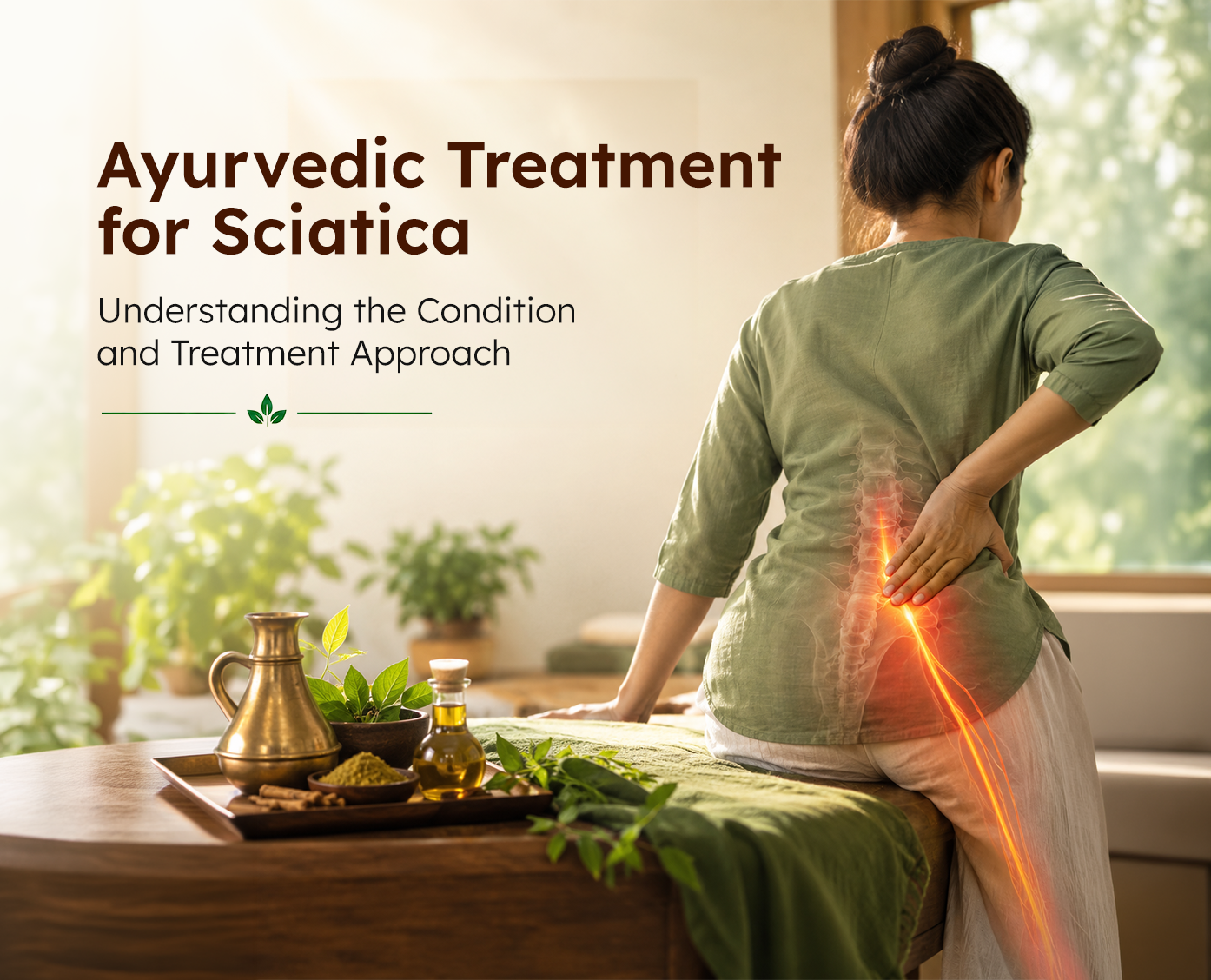
Sciatica is a condition that can affect everyday movement and comfort. This makes simple activities such as sitting, walking, or standing difficult. It generally refers to pain or other symptoms that follow the path of the sciatic nerve, which runs from the lower back through the buttock and into the leg. A herniated disc, spinal narrowing, injury, degenerative changes, poor posture, and prolonged sitting can contribute to sciatic nerve symptoms.
In Ayurveda, sciatica is commonly correlated with a condition known as Gridhrasi, which is traditionally associated primarily with an imbalance of Vata Dosha. An Ayurvedic Treatment for Sciatica focuses on understanding your symptoms, contributing factors, and overall health before selecting appropriate therapies.
Recognising the Symptoms of Sciatica
The symptoms of sciatica can vary depending on its underlying cause and the nerves involved. Some people experience mild discomfort, while others may have symptoms that interfere significantly with daily activities.
Common sciatica pain symptoms include:
- Pain that begins in the lower back and travels through the buttock and leg
- Tingling or pins-and-needles sensations
- Numbness in the leg or foot
- Lower-back stiffness or discomfort
- Difficulty sitting, standing, or walking for extended periods
- Muscle weakness in more severe cases
Sciatic nerve pain may affect one side of the body and can become more noticeable with certain movements, prolonged sitting, or physical strain. Persistent or worsening symptoms should be professionally evaluated rather than managed solely with home remedies.
Common Causes and Risk Factors of Sciatica
Sciatica can develop for several reasons, which makes identifying the underlying cause an important part of treatment planning. A herniated or slipped disc may place pressure on a nerve root, while spinal stenosis can narrow the spaces through which nerves pass. Spondylolisthesis, injuries, and degenerative changes in the spine may also contribute.
Lifestyle factors can play a role as well. Prolonged sitting, poor posture, repetitive physical strain, and sudden heavy lifting may increase discomfort or aggravate existing symptoms. Muscular tension around the lower back and hips can also contribute to pain in some individuals.
Because the causes can differ, Ayurveda treatment for sciatica should ideally begin with an assessment rather than a standard treatment plan. Understanding the person’s symptoms, physical condition, lifestyle, and other health factors can help determine an appropriate approach.
How Ayurveda Views Sciatica?
Ayurveda identifies sciatica with Gridhrasi, traditionally describing symptoms such as pain and stiffness along the lower back and leg. The condition is commonly associated with Vata Dosha, although Ayurvedic assessment may consider other factors depending on your presentation.
From a traditional Ayurvedic perspective, aggravated Vata may be associated with dryness, stiffness, pain, and restricted movement. Degenerative changes and obstruction affecting normal movement are also considered when understanding the condition.
A Sciatica Ayurvedic treatment approach is therefore generally individualised. An Ayurvedic physician may consider the person’s symptoms, constitution, lifestyle, digestion, overall health, and other relevant factors before recommending therapies. This personalised approach is important because sciatica can have different underlying causes, some of which require medical investigation.
Ayurvedic Treatment for Sciatica: A Holistic Approach
Ayurvedic management may include several therapies rather than depending on one procedure. Depending on your condition, an Ayurvedic physician may recommend therapies such as Abhyanga, a therapeutic oil massage; Kati Basti, where warm medicated oil is retained over the lower back; and Swedana, a traditional fomentation therapy.
Other therapies that may be considered include Elakizhi, Pizhichil, Basti therapy, and Dhanyamla Dhara. These therapies have different traditional applications, and their suitability, sequence, frequency, and duration should be determined after individual assessment.
The aim of an Ayurvedic treatment for sciatica pain is not simply to address discomfort temporarily but to develop a broader management plan that may include therapies, appropriate movement, diet, daily routines, and other supportive measures.
How Kati Basti May Support Sciatica Care?
Kati Basti is a traditional Ayurvedic therapy commonly used for lower-back concerns. During the procedure, a small reservoir is created over the lower back and filled with warm medicated oil for a specified period.
The warmth and oil application are traditionally used to support comfort and ease stiffness in the lower-back region. Kati Basti may sometimes be done with other Ayurvedic therapies as part of your treatment plan.
However, it should not be considered a universal treatment for every cause of sciatica. The underlying condition and the person’s overall health should be assessed before deciding whether Kati Basti is appropriate.
Lifestyle Practices That May Support Sciatica Recovery
Daily habits can influence how the back feels and functions. Maintaining good sitting posture, avoiding prolonged periods of sitting, and taking regular movement breaks can help reduce unnecessary strain. Ergonomic seating may also be useful for people who spend long hours at a desk.
Appropriate stretching, yoga, or strengthening exercises may support mobility when recommended by a qualified healthcare professional. Avoiding sudden heavy lifting and maintaining a healthy body weight can also reduce physical stress on the back. An Ayurvedic physician may additionally recommend dietary and daily-routine changes based on individual needs.
When to Seek Professional Help for Sciatica?
Persistent, severe, or worsening symptoms should be evaluated by a qualified healthcare professional. Sciatica accompanied by loss of bladder or bowel control, numbness around the groin or saddle region, or significant or progressive weakness in the leg requires urgent medical attention, as these can be signs of serious nerve compression.
Exploring an Individualised Ayurvedic Approach to Sciatica
Sciatica can have different underlying causes, so its management should be based on an appropriate assessment. Ayurveda approaches Gridhrasi through individualised evaluation and may combine traditional therapies with lifestyle practices, exercise, and dietary guidance.
If you are considering Ayurvedic Treatment for Sciatica, consult a qualified Ayurvedic physician to understand whether the approach is appropriate for your condition and to develop a treatment plan suited to your individual needs.