



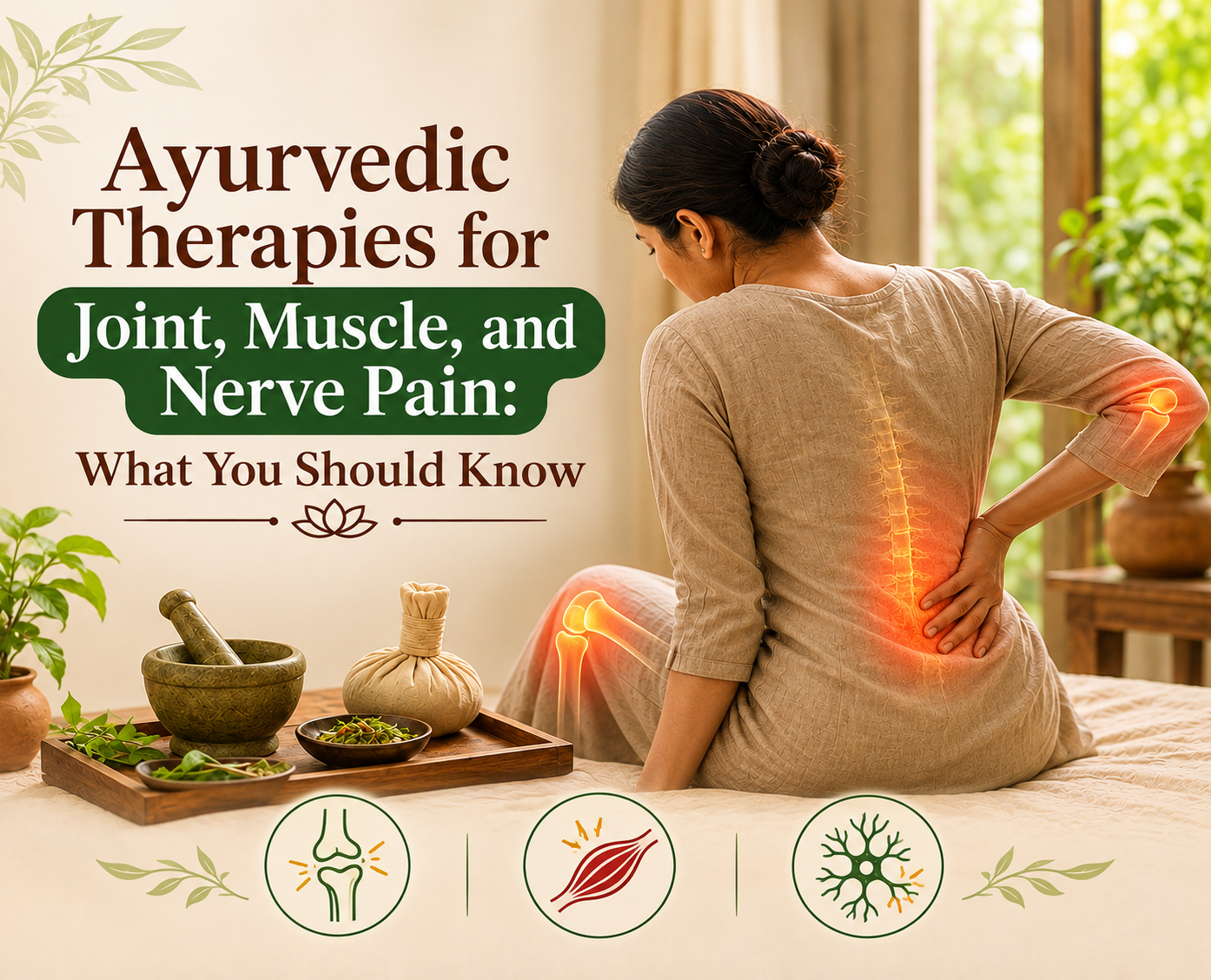
Pain in joints, muscles, and nerves is common. Joint pain leads to discomfort from injuries, stiffness, and swelling. Muscle pain involves soreness or tension due to injuries, overuse, infections, nutrient deficiencies, and chronic disease. Nerve pain involves disturbance or damage, such as spinal nerves being pressed or pinched. These problems restrict mobility, cause muscle weakness, muscular atrophy, and discomfort, and lead to serious psychological problems.
Ayurvedic therapy for pain management provides pain relief through individualized therapeutic approaches, including lifestyle changes, natural remedies, as well as self-care methodologies.
Understanding Different Types of Pain
Joint Pain
Joint pain results from damage, stress, and inflammation of the cartilage, bone, or surrounding tissue. Some of the causes of joint pain include osteoarthritis (OA), age-related changes, inflammation, and factors like excess body weight, strain related to physical activity or work, and genetic predisposition. Osteoarthritis (OA) results in friction of bone on bone, changes in bone structure, and osteophytes. Age-related changes from wear and tear of the joints that come with a lifetime of movement. Inflammation results from the body’s immune response or metabolic issues, and in osteoarthritis, it can be caused by overuse or flare-ups.
Muscle Pain
This happens due to muscle strain, overexertion, poor posture, and stiffness. Muscle strain or a pulled muscle is an injury where muscle fibres or attached tendons are stretched beyond their limit or tear. Symptoms include sharp or dull pain, localised tenderness, bruising, swelling, and muscle spasms. Physical overexertion happens when you push your body or specific muscle groups past their fatigue threshold without adequate rest. This drains energy, causing micro-damage to muscle tissues and leading to delayed-onset muscle soreness (DOMS) or exhaustion. Poor posture includes slouching at a desk, hunching over a neck, or improper lifting techniques for long hours. This overworks or weakens muscle groups, which creates chronic tension and abnormal spinal loads. Muscle stiffness can happen due to inactivity, dehydration, lack of a proper warm-up, post-exercise inflammation, or protective muscle guarding after an injury.
Nerve Pain
Nerve damage may result from compression, irritation, or some type of injury. Conditions resulting from nerve dysfunction include, among others, sciatica, peripheral neuropathy, or nerve compression (i.e., a pinched nerve). Sciatica indicates pain that occurs as a consequence of irritation, inflammation, and compression of the sciatic nerve and its spinal roots in the lumbar area. The pain often radiates downwards from the lumbar region or buttocks along one of the legs and possibly into toes or feet. Peripheral neuropathy is defined as damage to the peripheral nerves, which are the nerve cells outside the spinal cord and the brain. The disorder often appears symmetrically in the distal parts of the body before progressing upwards through the legs, fingers, and hands. Diabetes and metabolic disorders, vitamin insufficiencies, viruses, infections, or toxic exposure can be potential causes of the problem. Nerve compression is defined as the pressure applied to one spinal area from its tissues, bones, muscles, or cartilage. The phenomenon refers to the pressure that affects a specific nerve root, causing weakness or obstructed reflexes in the neighbourhood areas. Causes of nerve compression are repetitive injuries, poor posture, arthritis, and injuries of the spine.
How Ayurveda Approaches Joint, Muscle, and Nerve Pain
In Ayurveda, the issues of pain are looked at from the viewpoint of Shoola, which refers to colic and pain in general. Classical Ayurvedic texts, such as Sushruta Samhita, mention that it is the outcome of malfunctioning of the doshas in the body.
Are you aware that Vata imbalance can lead to pain? Vata means “movement,” “transmission of sensations,” and “nerve impulses,” which play a significant part in pain according to Ayurvedic tradition. When vitiated, Vata leads to obstruction, evil, dryness, and depletion, which in turn leads to disturbed movement and lubrication.
In Ayurvedic pain management, treatment is tailored according to prakriti, ailments present, and overall state of health. While interpreting the balance between prakriti and vikriti, practitioners prepare a formulated ahara (diet), vihara (lifestyle), and aushadhi (medicine) to treat symptomatic ailments in the present time.
Generally, the practice is based on four interacting pillars that lead to the understanding of the principles of prakriti and vikriti. These pillars are Bahirparimarjana/Panchakarma (external treatments), Antarpaimarjana/Aushadha (internal treatments), Ahara (eating), and Vihara (lifestyle).
Consultation is important here for four reasons: identifying the root cause, prescribing dosage and formulation, Panchakarma and detox preparation, and integration with modern medicine.
Common Ayurvedic Therapies for Pain Management
Abhyanga (Therapeutic Oil Massage)
This massage uses warm, herbal-infused oils selected based on an individual’s dosha or specific health needs. They are medicated with specific therapeutic plant decoctions and herbal pastes cooked into a base oil, so that the active lipophilic compounds can absorb deeply through the cutaneous layers to nourish underlying dhatus. It supports parasympathetic activation, hormonal regulation, and Vata pacification. This way, the Ayurvedic treatment for joint pain down-regulates the nervous system and shifts the body out of a chronic state.
Pizhichil (Oil Bath Therapy)
This Kerala Ayurvedic oil therapy involves pouring warm oil continuously and massaging. During the therapy, oil is heated, cloth is squeezed, massage is done, and there are various changes in positions and times. This Ayurvedic treatment for muscle pain penetrates heat, relieves stiffness, pain, and tiredness, and nourishes the body.
Kizhi (Herbal Bolus Therapy)
This therapy is also known as Pinda Sweda and Herbal Bolus therapy. It is a traditional external Ayurvedic and Kalari treatment from Kerala. Its poultice includes fresh medicinal leaves, coarse herbal powders, or cooked medicinal rice. This treatment addresses muscular tension and joint stiffness through deep heat (swedana), rhythmic pressing and tapping, targeting joint rigidity, and herbal anti-inflammatory action.
Janu Basti
This Ayurvedic treatment for joint pain includes the knee joint bath, patient positioning, reservoir construction, sealing and oil application, proper temperature maintenance, and post-process instructions. This technique involves heating and lubrication in order to relieve symptoms and offer non-invasive assistance.
Kati Basti
In this method, warm herbal oil is kept over the lumbosacral region (lower back) for a long period. The method consists of the reservoir, warm oil, and deep penetration. The technique is indicated for muscle relaxation, stiffness and mobility, mechanical lower-back pain, lumbar spondylosis, degenerative disc disease, and other nerve-related symptoms like sciatica.
Benefits of a Personalised Ayurvedic Pain Management Approach
The huge benefit is that it shapes medical strategies based on the patient’s unique health profile and daily functioning. An assessment includes biopsychosocial evaluation, pain type differentiation, and targeting root causes. This approach addresses targeted interventions, multimodal medication safety, movement and physical function, behavioural and lifestyle support, and multidisciplinary coordination.
A balanced combination of therapies, dietary guidance, and lifestyle recommendations becomes the foundation for preventive medicine, chronic disease management, and long-term vitality. Dietary guidance includes physiological regulation, gut microbiome support, and disease prevention and management. Therapeutic interventions include targeted medical and behavioural care, symptom mitigation and recovery, and complementing pharmacotherapy. Lifestyle recommendations include the pillars of lifestyle medicine, cellular and systemic protection, and quality of life and longevity. These three guarantee potential benefits such as relaxation, improved comfort, and support for mobility.
Treatment outcomes are based on three factors: disease type and stage, etiology and clarity, and comorbidities. This is because of biological and genetic factors, overall health and resilience, and patient preferences and engagement.
Diet and Lifestyle Practices to Support Pain Management
For effective Ayurvedic pain management, include a balanced diet with all food groups, regular exercise, weight monitoring, proper rest, stress management, and a healthy lifestyle.
A good diet provides the body with enough nutrients required for functioning normally. The diet should include the right food combinations and avoid excess sugar, salt, or saturated fat; the fluid used should also be appropriate.
Gentle physical activity such as yoga and stretching allows recovery from injuries on different levels.
Balancing normal body weight and proper body posture supports cardiovascular fitness, healthy bones and joints, spine alignment, and overall health. These habits also improve energy levels, sleep quality, breathing, and muscular strength.
Getting enough sleep, managing stress, and being active protect the heart and brain from these problems. Sleep naturally restores the nervous system, reduces stress hormone levels, and increases emotional stability.
Personalized diet and lifestyle recommendations complement medical therapy and facilitate long-term treatment compliance. They complement drug therapy, help tackle the root cause, reduce recovery time and complications, and suit real-life routines.
Why Choose Professional Ayurvedic Pain Management?
You should choose Ayurvedic therapies for pain management by qualified professionals and therapists for four reasons:
- Establishing the Cause of Pain – Different reasons can lead to pain, such as different illnesses or injuries. In this case, a doctor treats the patient accordingly.
- Expertise of Doctors and Therapists – Health professionals identify health problems and administer the needed treatment.
- Treatment Plans According to Individuals – The response to therapy depends on the person; therefore, the treatment should be modified depending on the condition of the patient.
- Regular Follow-Up – The follow-up procedure helps to understand the result of treatment, and if necessary, treatment is altered according to the patient’s response.
Travancore Ayurveda offers a variety of Ayurvedic pain management treatments, including standard treatment methods, internal medicine, and personal lifestyle guidance. Qualified doctors consider individual needs and suggest the right therapy.
Conclusion
Maintaining a healthy weight and good posture improves cardiovascular function, strengthens bones and joints, as well as spinal alignment and overall health. They also increase energy levels and improve sleep, breathing, and strength without causing any additional pressure on the body. Staying active, using good ergonomic techniques, and eating a balanced diet will help maintain good health longer.
Travancore Ayurveda offers trained physicians who can help with pain-related issues by prescribing appropriate Ayurvedic therapies for pain management according to your problem. Ayurvedic treatment can be added to the treatment plan, including other appropriate options.