



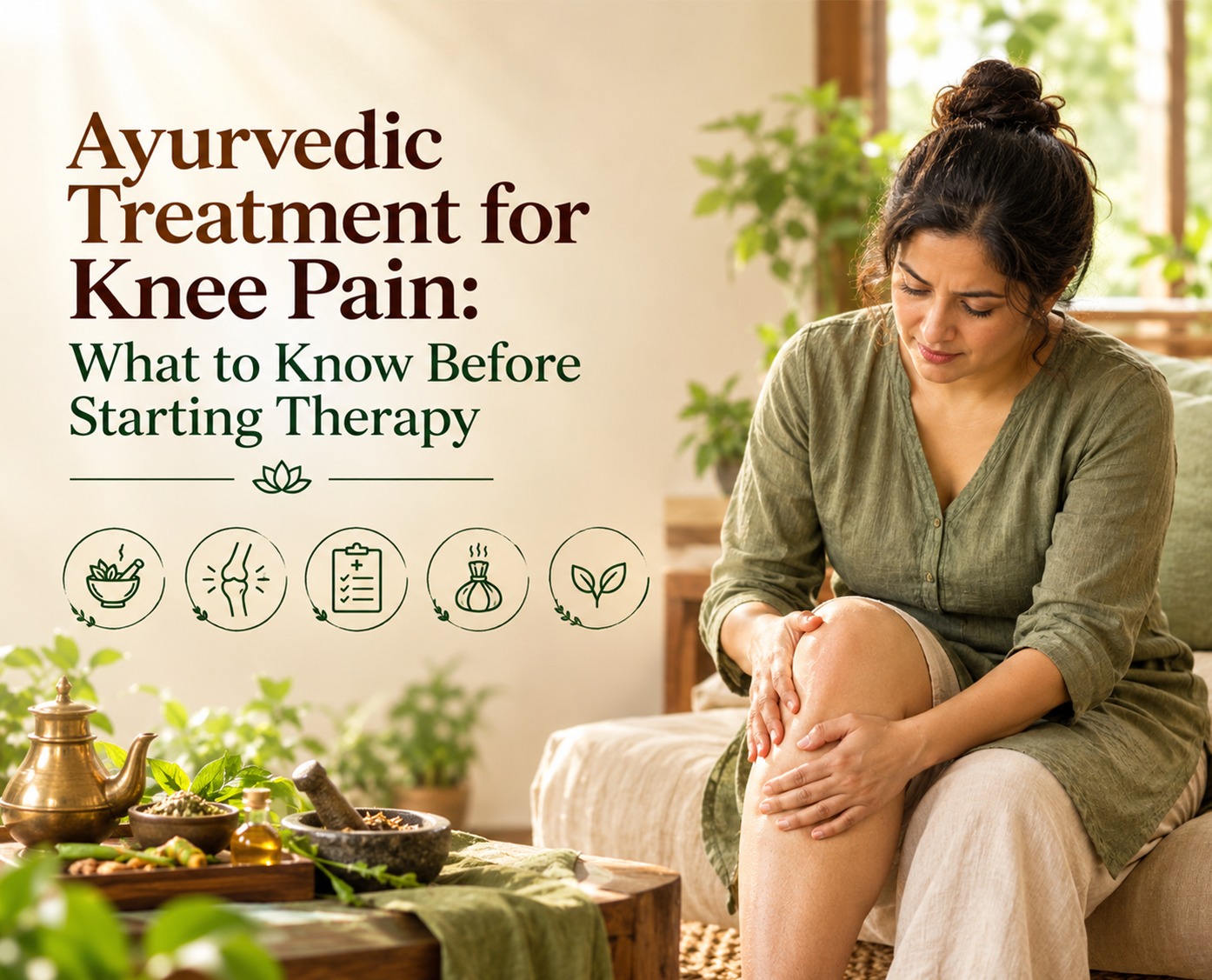
Before approaching any Ayurvedic treatment for any cause, you should know that Ayurveda primarily focuses on understanding possible contributing factors and supporting pain relief, mobility, and joint function through personalised therapies, lifestyle measures and other Ayurvedic approaches.
Coming to knee pain. Knee pain can be triggered by stiffness, reduced mobility, discomfort while walking, climbing stairs or performing everyday activities. Ayurvedic practitioners consider these factors under lifestyle symptoms and physical condition. This helps them select the right Ayurvedic treatment for knee pain that comes with appropriate external therapies, lifestyle recommendations, and other traditional approaches.
What Causes Knee Pain?
Several factors cause knee pain: Osteoarthritis and age-related joint changes, muscle or ligament strain, previous injuries, inflammation, joint stiffness, overuse, and reduced mobility.
Osteoarthritis and age-related joint changes cause knee pain and stiffness through progressive breakdown of protective cartilage, friction between exposed bones, inflammation in joint structures, and other age-related changes.
Muscle or ligament strains occur when soft tissues that stabilize and move the joint are stretched, torn, or overworked, leading to mechanical stress, inflammation, and loss of structural support.
Previous injuries alter joint mechanics, permanently damage cartilage or ligaments, scar tissue buildup, weaken and imbalance muscles, and trigger long-term changes in surrounding muscles and tissues.
Inflammation increases blood flow, releases immune chemicals that sensitize nerve endings, and causes fluid buildup (swelling) that stretches and compresses the tight joint capsule and surrounding tissues.
Joint stiffness triggers knee pain by increasing friction, inflammation and swelling, muscle and tendon tightness, and loss of flexibility and guarding.
Overuse causes knee pain when repetitive physical stress exceeds the body’s natural tissue repair capacity, leading to microscopic damage and inflammation in the tendons, ligaments, cartilage, or bursae.
Reduced mobility is connected to joint pain through loss of joint lubrication, muscle atrophy and weakness, muscle imbalances and tightness, adjacent joint compensation, and worsening of arthritis symptoms.
How Does Ayurveda Approach Knee Pain?
Through individual assessment, personalised therapies, lifestyle modifications, and dietary considerations. Treatments are prescribed based on the person’s symptoms, overall health, and mobility needs. The primary aim of Ayurvedic treatment for knee pain is to support joint comfort and manage stiffness and discomfort.
Ayurvedic treatment includes individual assessment, supporting joint comfort and mobility, managing stiffness and discomfort, personalised therapy selection, lifestyle and dietary considerations, and professional medical guidance.
Individual assessment evaluates Dosha, Prakriti, symptoms, and joint degeneration to guide personalised Ayurvedic care. Assessing them determines suitable lifestyle changes, dietary adjustments, and oil applications. The practitioner may consider therapies such as Janu Basti based on individual needs. It also helps set realistic expectations and select appropriate approaches to manage discomfort, stiffness, and joint function.
Supporting joint comfort and mobility involves Vata pacification, local Snehana and Swedana (oil application and herbal steam), Ama Pachana, Dhatu Poshana, and gentle movement or yoga. These approaches aim to manage stiffness, discomfort, and restricted movement while supporting flexibility and muscle strength. Gradual, appropriate movement may help maintain functional mobility without overloading the knee. Treatment should be personalised to the individual’s condition, with medical evaluation for persistent or severe symptoms.
Managing stiffness and discomfort in Ayurvedic therapy for knee pain balances Vata Dosha, supports joint lubrication (Shleshaka Kapha), and improves flexibility and mobility. Therapies such as Janu Basti, Snehana, and herbal bolus fomentation (Potli) may help manage stiffness and discomfort. Personalised care may also include gentle movement, moderate yoga, relaxation, dietary adjustments, and selected herbal formulations or Panchakarma therapies, based on individual assessment and professional guidance.
Personalised Ayurvedic therapy considers the patient’s Dosha imbalance, symptoms, digestive health, and overall strength. Treatments may include local therapies such as Janu Basti, Snehana, and Swedana, alongside Panchakarma or Shamana herbal treatments where appropriate. Practitioners may also recommend suitable dietary changes, weight management, gentle yoga, and daily routines based on individual needs and joint condition.
Lifestyle and dietary changes are central to Ayurvedic knee pain management. Warm, unctuous foods, anti-inflammatory spices, and calcium-rich foods may support digestion (Agni), joint comfort, and bone health. Ayurveda emphasises reducing Vata aggravation and Ama accumulation. Limiting iced drinks, raw or dry salads, processed foods, excess caffeine, and gas-forming beans may also support overall joint wellness.
Which Ayurvedic Therapies May Be Used for Knee Pain?
Abhyanga
This traditional Ayurvedic warm oil massage balances the Vata dosha (the biological energy governing movement, dryness, and space in the joints) to relieve stiffness, improve circulation, and nourish musculoskeletal tissues. This process makes it a therapeutic plan rather than a simple relaxation rub. It involves therapeutic oils (Tailam), oil preparation, massage technique, duration and retention, and post-massage care (Swedana). The general frequency is typically scheduled daily or 3 to 4 times a week during an active care phase, then transitioning to a weekly maintenance routine as mobility improves.
Localised Oil Therapies
The primary oil therapy often prescribed is Janu Basti, a treatment where warm medicated oil is pooled and retained directly over the knee joint. Other therapies include Upanaham and Abhyanga / Snehana (Localised Massage). Janu Basti commonly uses Mahanarayan Tailam, Ksheerabala Tailam, and Sahacharadi Tailam. Upanaham uses herbal pastes combined with medicated oils. Abhyanga / Snehana (Localised Massage) includes Dhanwantharam Tailam and Ksheerabala Tailam.
Janu Basti
Janu means knee, and Basti means holding or retaining (often called an Ayurvedic oil-pool knee therapy). In Janu Basti, warm medicated oil is retained in a well or “pool” over the knee joint to relieve pain, stiffness, and degeneration. This is a four-step treatment. First is preparation, then comes dam placement, then oil is poured and retained, and finally, post-treatment care is given. The treatment includes primary indication, medicated oils, and dough dam material. The treatment typically lasts 7 to 14 consecutive days. It depends on severity and physician recommendation.
Swedana
Swedana helps in pacifying local Vata and Kapha imbalances, improving joint mobility, and easing stiffness. The targeted heat and medicinal herbs address accumulated toxins (ama), relax surrounding muscles, and reduce discomfort. Usually integrated into a broader Ayurvedic regimen, this therapy has three variations: Patra Potli Swedan (Patra Pinda Sweda), Nadi Sweda, and Pinda Sweda.
What Should You Know Before Starting Ayurvedic Knee Pain Treatment?
The root cause. Knee pain can stem from osteoarthritis, injuries, inflammation, or other conditions. Identifying the right cause helps in determining the right Ayurvedic treatment for knee pain. This is done by assessing and sharing the medical history. During the assessment, a qualified Ayurvedic professional will evaluate symptoms to map out further medical evaluation or investigation before beginning the treatment. Sharing your medical history informs your practitioner about your existing health conditions, allergies, medications, and any ongoing treatments.
Ayurvedic treatments involve therapies, lifestyle modifications, and other approaches. Therefore, practitioners prescribe treatment based on your symptoms, health status, and individual needs identified during the assessment.
How Long Does Ayurvedic Treatment for Knee Pain Take?
The duration of Ayurvedic therapy for knee pain depends on six factors:
- Fluctuating Treatment Tenure – A treatment’s duration depends on the individual’s underlying cause, individual health, and response to treatment.
- Cause of Pain – Different causes require different treatment approaches and recovery timelines. Injury, arthritis, or joint conditions have different treatments and durations.
- Severity and Duration of Symptoms – Mild, recent, severe, and persistent knee pain respond differently to treatment.
- Age and Overall Health – Age, physical activity, existing health conditions, and general well-being can determine the alignment between your health factors and the treatment plan and recovery timeline.
- Treatment Approach – Treatment duration varies based on the recommended therapy, lifestyle modification, and other supportive measures.
- Individual Response – Treatment response varies between individuals. A certified Ayurvedic practitioner will evaluate your condition and suggest an appropriate treatment plan and follow-up schedule.
Can Ayurveda Help With Knee Stiffness and Mobility?
Ayurveda could be viewed as a personalised approach to support comfort, flexibility, and mobility in people experiencing certain types of knee discomfort. Each treatment is prescribed based on the person’s symptoms, health condition, and underlying cause of knee stiffness. Determining the right treatment supports comfortable movement and helps individuals manage stiffness during everyday activities. For the right treatment, consult a qualified Ayurvedic practitioner.
If you have persistent or severe knee stiffness, swelling, or difficulty walking, then you should go for appropriate medical evaluation, as Ayurveda is complementary, not a replacement for necessary medical treatment.
When Should You Seek Medical Evaluation for Knee Pain?
You should seek immediate medical attention in six situations:
- Severe or sudden knee pain
- Significant swelling
- Pain following a major injury
- Inability to bear weight
- Fever or other concerning symptoms
- Persistent or worsening pain
Before choosing any treatment, identify the root cause of your knee pain and choose between Ayurveda and allopathy accordingly.
Is Ayurvedic Treatment Right for Your Knee Pain?
Knee pain can arise from various causes, including injuries, arthritis, inflammation, and age-related changes. Since every condition is different, identifying the underlying cause is essential before choosing an appropriate treatment approach. Ayurvedic treatment for knee pain should be personalised based on an individual’s symptoms, health condition, and overall needs.
At Travancore Ayurveda, experienced Ayurvedic physicians can assess your concerns and recommend suitable therapies based on your individual condition. Ayurveda may be considered as part of a comprehensive knee-pain management plan, alongside appropriate medical care when needed. Consult a qualified practitioner to understand whether Ayurvedic therapy for knee pain is suitable for your knee pain and wellness goals.